The first half of the semester has passed, and to say it has been a busy time would be an understatement. Over the course of the last few weeks, I attended my conferring for my BA in Music & English and have begun working on my first essay for my Theories of Modernity module.
Graduating has definitely brought me to reflect upon my last three years at University College Cork. I was always encouraged to experiment and investigate new methods of research during my time as an undergraduate student. Some of my favourite projects include a presentation I gave on “Sirens”, an episode of Ulysses where the narrative structure is based on musical forms (combining my two passions!), a group project I participated in where we recorded a podcast on vampires in literature from the 18th century to the present day, and a project where I investigated the disparity in gender representation in Irish music and how DIY collectives, events and initiatives can uplift women in the music industry.
I have always enjoyed taking a more multi-faceted approach to different projects, and I love challenging myself to think outside of the box when answering the question. However, with my first deadline approaching, I do feel under slightly more pressure to contribute to the academic field with more original ideas. I have chosen to write about how different 19th century thinkers represent the relationship between humans and technology. I found the seminar covering 19th century representations of modernity to be extremely engaging and I felt like the class group worked really well to collaborate and build off of our ideas and interpretations together. What I found most striking about these texts was the tendency of these authors to identify the worker with the machine, and their not-so-subtle reliance on essentialist ideas of gender. I found the presence of these essentialist ideas most interesting considering that these thinkers tend to praise technological advancement as it allows society to progress forward and for humans to work beyond their natural limitations. However, it is clear that the benefits of scientific and technological advancements were never intended to be divided out equally when we consider the issues of classism and sexism in 19th century society. Ure praises a particular employer for maximising profits “by substituting the industry of women and children for that of men; or that of ordinary labourers for trained artisans” (2). Even the more progressive Martineau often fails to meaningfully distinguish between man and machine in her admiration of the industrial process (Fielding and Smith, 419-20). When this idea popped up in our seminar discussions, I knew that I wanted to investigate this line of thinking even further in my essay.
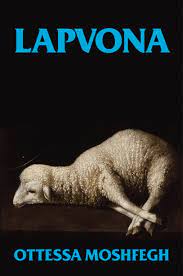
While I have been quite busy lately, I did have the chance to finish a new novel. Lapvona by Ottessa Moshfegh is a historical fiction/horror novel which takes place in the fictional feudalist village of Lapvona and follows the various villagers’ depraved antics. While I was not entirely taken with the novel–the plot felt a little directionless for my liking–it was definitely a unique read with a creative and original cast and setting. The main character, Marek, is the deformed son of Jude, a disturbed shepherd. The main character and his father experience intense bouts of religious guilt and frequently engage in self-flagellation in the hopes of absolving their sinful thoughts and desires. Marek is able to ascend above his circumstances, however, when he accidentally kills the Lord Villiam son and is unexpectedly adopted by him as a replacement. Moshfegh refuses to shy away from portraying the very darkest aspects of society. Violence, gore, sexual assault, religious trauma and even cannibalism are all present throughout the novel, so much so that some readers may view these as gratuitous. There is some commentary on class, as the villagers resort to cannibalism during a drought and famine while the king hoards a nearby spring to build a moat. The novel is a unique read, but it is definitely far from subtle!
Ure, Andrew. The Philosophy of the Manufacturers, 1835, London, pp. 3.
Fielding, K. J., and Anne Smith. “Hard Times and the Factory Controversy: Dickens vs. Harriet Martineau.” Nineteenth-Century Fiction, vol. 24, no. 4, 1970, pp. 419-20. JSTOR, https://doi.org/10.2307/2932383. Accessed 2 Nov. 2022.