Wikipedia Editathon: A Spot of Spring Cleaning

A few weeks ago, I was required to come together with my fellow MA English students, as we were to edit a Wikipedia page of our choosing. The requirements were broad, so long as our chosen pages were tangentially related to our respective research interests.

One of my main research interests is portrayals of disability and illness in literature. While I would usually gravitate towards more Gothic texts, I wanted to edit the page for Kazuo Ishiguro’s Klara and the Sun (2021). The novel features some transhumanist themes, as Klara, an Artificial Friend (an android that serves as a child’s companion in a more isolated future) is assigned to Josie, a young girl who has fallen ill. Over the course of the text it is revealed that Josie’s illness is a result of a ‘lifting’ procedure (where children are genetically modified in order to enhance their intelligence) gone awry. Klara discovers that she has been chosen by Josie’s family due to her remarkable ability to observe her surroundings and mimic those around her, rendering her the perfect candidate to ‘continue’ Josie’s life if she should succumb to her illness. As the novel was published fairly recently, the Wikipedia page lacked certain sections, so I decided to do some general housekeeping before adding two new sections.

My first challenge was adapting to Wikipedia’s style guidelines. I decided to model my writing off of the closest article I could find, so I opted to use the page for another Ishiguro novel, Never Let Me Go (2015) as a reference. This page was noticeably more fleshed out due to the novel’s age and success and served as a useful ‘control’. In comparing these two articles I was able to take note of what my chosen one lacked. This was how I decided to add a character list which was noticeably missing from the page I had chosen. I decided to create an External Links section after finding some information which had not been included in the original article.

It felt strange to be contributing such a large chunk of text to a pre-existing article. My uncertainty about Wikipedia’s style was definitely an obstacle, as I tried to strike a balance between maintaining a style that was impassive but adequately descriptive. I also found it difficult to balance the amount of text dedicated to each character–despite the fact that Klara is the narrator, I found that there was little to say about her compared to the other characters.

I found that, while some reference had been made to the novel’s critical reception, there was no section linking to reviews, which can be seen on the page for Never Let Me Go. I added this external links section to make it easier for readers to find these.

Lastly, I edited the tags to include Transhumanism and Speculative Fiction, although, admittedly the Transhumanism tag was later removed! Although this was slightly embarrassing, it is always interesting to watch Wikipedia’s mass collaboration play out in real time. I had expected to make one or two mistakes or to encounter disagreements so I was delighted to see my character list and links sections had been untouched even weeks after their addition.

This exercise was an unconventional look at contemporary scholarship, and the atmosphere in class coupled with the requirement to live Tweet our edits was a welcome deviation. It certainly caused me to examine my preconceptions of research and to appreciate the Internet as a collaborative tool. It was enlightening to watch my coursemates Tweeting about their diverse interests and using their unique skills and knowledge to alter, improve and translate these pages. While certain corners of the Internet are fraught with misinformation, it is encouraging to realise that knowledge is more accessible than ever due to the combined efforts of countless individuals with their own specialised interests and skills. I would say that our class that day was a microcosm of this.


Some Thoughts on the Public, Private and Pandemic in Pearl (2022)

October has come and gone, and it’s safe to say that I have consumed my fair share of horror films over the last week or so. I would like to say that I have developed a fairly strong stomach when it comes to horror–Midsommar and Silence of the Lambs are two of my favourite films of all time–but Ti West’s Pearl is unsettling in a different way. The Gothic has been one of my research interests from the very beginning of my academic journey; something about the macabre in literature has always been appealing to me.

The titular character is a young woman born to German immigrant parents, who must tend to their farm while her husband is overseas fighting in WWI. Pearl’s mother is controlling and repressive, and Pearl is limited by her duties of managing the farm and caring for her disabled father. The main character’s Southern drawl, modest personality and girlish appearance make her appear deceptively innocent. However, there is a disturbing disparity between her actions in public and the desires she exhibits when nobody is watching.

The film presents several contrasts to the audience throughout; public and private, repression and sexuality, tradition and progression. Pearl desires to move past her humble origins, desperate to be seen for what she believes she is: a star. She becomes fixated on “the pictures”, fascinated by the dancers she sees in her local cinema. The resident projectionist introduces Pearl to pornography, assuring her that it is soon to become legal and that she, too, could be on screen someday. In one of the more unsettling scenes of the film, Pearl goes home and simulates intercourse with a scarecrow, all the while fantasising about the projectionist. This is not the first time the protagonist is seen engaging in unusual and disturbing behaviours in private, speaking to her farm animals as if they were human and killing them when she feels they have insulted her or misbehaved. When Pearl’s controlling mother confronts her for leaving the house, Pearl murders her, showing her new, disturbingly defiant character.

It would be impossible to mention the backdrop of the influenza pandemic presents without relating it to the ongoing covid pandemic. Pearl’s mother witholds food once she discovers that she has been to town, putting her father at risk. There is a feeling of isolation present throughout; the cinema is sparsely attended, and background characters are seen walking alone with their faces covered. One particular shot, where Pearl is watching a film, alone, and slips down her mask to eat, feels so mundane, but so unnervingly relevant to today, that it honestly caught me off-guard.

The most memorable scene of the film occurs when Pearl attends an audition to join a dancing group. Her dream of moving beyond her isolated life on the farm finally feels within reach, and she obsesses over her routine in the hopes that she may become like the dancers she admires in the cinema. However, when Pearl is rejected, she suffers a breakdown, screaming at the judges that she is a star and having to be escorted away. Not only has she suffered the heartbreak of missing out on her dream of being on the screen, Pearl fears that this rejection has condemned her to waste away on the farm for the rest of her life. In a striking monologue, Pearl reveals to her sister-in-law, Mitsy, that she has always felt different from others due to her inner feelings and desires, and that she resents her husband so much for leaving her on the farm that she wishes he would die. It is the most clarity the audience sees from the protagonist, who is prone to fits of violent rage, which lead her to murder her parents and the projectionist. Mia Goth’s performance here feels honest and even sympathetic, with this monologue bringing a sense of depth to Pearl’s character. After revealing her despair, Pearl brutally murders Mitsy with an axe after becoming falsely convinced that the judges chose Mitsy over her.

https://www.youtube.com/watch?v=Y1CbJlbafXQ

The final scene, where Pearl’s husband returns home, feels like the ultimate defilement of the domestic space. He finds a feast of rotting food, with Pearl’s deceased parents seated at the table. The final image feels like a corruption of the traditional image of the nuclear family, perhaps as if to say that the old way of living has been done away with? Perhaps, in her disturbed mental state, the main character is finally attempting to perform the role of the housewife, but has become too detached from reality. Pearl comes to greet him, and the film ends on an extended close up shot of her strained, tortured smile.

I may revisit this film in my writings–it is still very fresh, so there is no doubt that there will be further discourse on the role of the domestic space, generational differences in early 20th century America and the role of sexual desire in the film. I know for sure that it’s a film I won’t be forgetting about anytime soon.

Wednesday 2nd November 2022: Some Reflections

The first half of the semester has passed, and to say it has been a busy time would be an understatement. Over the course of the last few weeks, I attended my conferring for my BA in Music & English and have begun working on my first essay for my Theories of Modernity module.

Graduating has definitely brought me to reflect upon my last three years at University College Cork. I was always encouraged to experiment and investigate new methods of research during my time as an undergraduate student. Some of my favourite projects include a presentation I gave on “Sirens”, an episode of Ulysses where the narrative structure is based on musical forms (combining my two passions!), a group project I participated in where we recorded a podcast on vampires in literature from the 18th century to the present day, and a project where I investigated the disparity in gender representation in Irish music and how DIY collectives, events and initiatives can uplift women in the music industry.

I have always enjoyed taking a more multi-faceted approach to different projects, and I love challenging myself to think outside of the box when answering the question. However, with my first deadline approaching, I do feel under slightly more pressure to contribute to the academic field with more original ideas. I have chosen to write about how different 19th century thinkers represent the relationship between humans and technology. I found the seminar covering 19th century representations of modernity to be extremely engaging and I felt like the class group worked really well to collaborate and build off of our ideas and interpretations together. What I found most striking about these texts was the tendency of these authors to identify the worker with the machine, and their not-so-subtle reliance on essentialist ideas of gender. I found the presence of these essentialist ideas most interesting considering that these thinkers tend to praise technological advancement as it allows society to progress forward and for humans to work beyond their natural limitations. However, it is clear that the benefits of scientific and technological advancements were never intended to be divided out equally when we consider the issues of classism and sexism in 19th century society. Ure praises a particular employer for maximising profits “by substituting the industry of women and children for that of men; or that of ordinary labourers for trained artisans” (2). Even the more progressive Martineau often fails to meaningfully distinguish between man and machine in her admiration of the industrial process (Fielding and Smith, 419-20). When this idea popped up in our seminar discussions, I knew that I wanted to investigate this line of thinking even further in my essay.

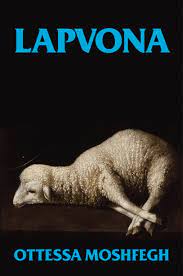
While I have been quite busy lately, I did have the chance to finish a new novel. Lapvona by Ottessa Moshfegh is a historical fiction/horror novel which takes place in the fictional feudalist village of Lapvona and follows the various villagers’ depraved antics. While I was not entirely taken with the novel–the plot felt a little directionless for my liking–it was definitely a unique read with a creative and original cast and setting. The main character, Marek, is the deformed son of Jude, a disturbed shepherd. The main character and his father experience intense bouts of religious guilt and frequently engage in self-flagellation in the hopes of absolving their sinful thoughts and desires. Marek is able to ascend above his circumstances, however, when he accidentally kills the Lord Villiam son and is unexpectedly adopted by him as a replacement. Moshfegh refuses to shy away from portraying the very darkest aspects of society. Violence, gore, sexual assault, religious trauma and even cannibalism are all present throughout the novel, so much so that some readers may view these as gratuitous. There is some commentary on class, as the villagers resort to cannibalism during a drought and famine while the king hoards a nearby spring to build a moat. The novel is a unique read, but it is definitely far from subtle!

Ure, Andrew. The Philosophy of the Manufacturers, 1835, London, pp. 3.

Fielding, K. J., and Anne Smith. “Hard Times and the Factory Controversy: Dickens vs. Harriet Martineau.” Nineteenth-Century Fiction, vol. 24, no. 4, 1970, pp. 419-20. JSTOR, https://doi.org/10.2307/2932383. Accessed 2 Nov. 2022.

Lapvona (2022), Ottessa Moshfegh