Dr Tina O’Toole on Avant Garde Feminism in Early Twentieth Century Ireland

In February I attended a talk given by Tina O’Toole of the University of Limerick on Avant Garde Feminism in a selection of early twentieth century texts. I was interested in attending as twentieth century literature and women’s writing are interests of mine, and O’Toole’s research is focused on authors who would previously have been unknown to me. The New Woman writers she focuses on, such as Rosamund Jacob, George Egerton, Sarah Grand and L.T. Meade, were often overlooked and several have only recently piqued scholars’ interest for their representations of women’s intimate lives, often focusing on queer relationships and gender roles within the domestic space.

Dr O’Toole focused on Rosamund Jacob’s The Troubled House as an example of Irish New Woman literature. Jacob encountered great difficulty in securing a publisher for the book, which focuses on the breakdown of Irish domestic life during the Civil War and the limited public spaces afforded to women in the Free State and counterculture in twentieth century Dublin. The narrator, Margaret Cullen, is an example of the more traditional ‘womanly woman’, while her husband represents the older nationalist generation. She encounters two New Women who live and work together, in contrast with her more traditional values. Nix, an artist, is sexually liberated and has a love for Modernism. Margaret’s home life is troubled when one of her sons joins the army, causing his father to reject him. The novel also plays around with men’s gender roles, as Margaret teaches her sons how to sew to be independent of women in her absence. Her son Liam also dresses as a woman to avoid capture after assassinating a British soldier.

In having Margaret occupy the role of an outsider (having returned after spending several years in Australia caring for her sister) Jacob captures several different perspectives of the Irish Civil War. She acknowledges the rapidly evolution of Avant Garde art, including movements like Cubism which often featured androgynous subjects. O’Toole posed that although Jacob’s contributions to the New Woman writing movement and uncovering of Irish counterculture have only recently been rediscovered, her connecting of politics and art and her accounts of gendered spaces in Ireland render it relevant and valuable to contemporary readers. Dr O’Toole’s talk was incredibly engaging and enlightening, covering a topic of which I admittedly do not have much knowledge. Her focus on the various gender perspectives and political views in twentieth century Ireland was fascinating and certainly inspired me to examine such differences in the texts I will focus on in my own research.
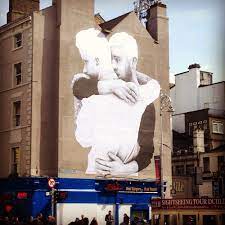
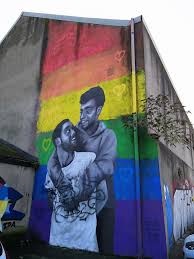
16th November 2022: Hopeful and Homoerotic Spaces in Irish Writing

Dr Michael G. Cronin is a lecturer at Maynooth University whose research centres around twentieth century and contemporary Irish writing along with sexuality studies. Yesterday, I attended a talk he gave on “Hopeful and Homoerotic Spaces in Irish Writing”, wherein Cronin distinguished between Irish Gay and Lesbian novels that focus on time, and those that focus on space. I lacked a certain context going into this seminar, as my studies in Irish literature have been admittedly limited. While I did touch on writers including Joyce, Beckett, Heaney and Friel during my studies as an undergraduate, Irish writing, not to mind Queer Irish literature, is not a research area that I would be hugely informed on. However, for me, this rendered the seminar all the more illuminating, and I would absolutely be open to researching further the issues and texts Cronin discussed.

Dr Cronin first provided some context to his research, discussing the Gay and Lesbian novel’s rise in popularity in Ireland in the nineties. He outlined the background of the Gay Liberation movement in the seventies as well as examples of queer Irish literature released prior to the nineties, pointing to the work of Kate O’Brien and Oscar Wilde. The post-Stonewall movement provided Queer communities with new visibility and forms of expression, as different sub-cultural identities and spaces took form. Spaces such as Gay saunas and bars allowed for freedom of expression and the exploration of identity, while Gay and Lesbian sections began to appear in book shops, acting, as Cronin put it, as the “literary form of a historically distinct formation”. This was the time when Catholic values were rendered residual, as Neoliberalism rose as the dominant ideology in Irish society. He also highlighted the de-criminalisation of sex between men in 1993 as an indicator of social progression and acceptance in Ireland. The context Cronin provided was equally engaging and informative, and was immensely valuable in my understanding of his research. Most intriguing, I felt, was his argument that changes in Gay and Lesbian Irish writing can be mapped along the route of Ireland’s economic boom and recession.

Cronin went on to discuss the work of authors including Jamie O’Neill, Michael O Conghaile and Barry McCrea. While the most popular forms of Gay and Lesbian writing would be the ‘coming-out romance’ and the historical romance, McCrea’s The First Verse and O Conghaile’s Sna Fir work to subvert standard tropes and expectations in Queer writing. Both novels centre around space rather than time, and follow unusual, disjointed structures. Both novels are more comparable to the adventure tale, with little focus on the act of coming out itself, which Cronin argued may be a critique of the significance placed on this rite of passage. McCrea’s novel utilises the inherited form of the coming of age narrative (one central protagnonist, uses a first person narrator, focuses on a student moving away from home), but alters it. The central drama is not rooted in the protagonist’s self-discovery, rather, it follows his addiction to Bibliomancy, a form of divination. This process causes him to hallucinate, although the distinction between reality and illusion are not always immediately apparent to the reader. Time becomes distorted and the novel ends without a conclusion or resolution, with the main character in the same place as he was in the opening scene, on the bus. Similarly, Sna Fir follows an episodic and disjointed structure, subverting the expectations of the linear biographical narrative. The novel presents men operating in various homosocial spaces, including pubs and university spaces. The main character has several encounters with older partners, but, once more, there is little focus on the act of coming out itself. Mobility is also huge in this text, as the protagonist travels from rural Connemara, to university, Dublin and London.

Cronin argued that these novels present a Utopian perspective, and that the propagation of hope necessitates an alternate position on the current reality. Homoerotic desire is positioned as “a vector for Utopian possibilities”. This is epitomised by the presence of the Gay sauna in these texts, which is described in Sna Fir as a place of absolute freedom, and the one space where liberty is tangible. These novels that focus on space rather than time present a more Utopian view and, Cronin argues, possess fewer internalised Capitalist or consumerist hegemonic values. The shift of the narrative focus away from the act of coming out and towards the characters’ ‘adventures’ is certainly refreshing.

This seminar was highly engaging and valuable and I would absolutely consider reading further into contemporary Gay Irish writing after attending. The inheritance of modernist and surrealist tendencies by the authors discussed and their fusion of these styles of writing with the outlined biographical narratives make for literature that presents new perspectives. Despite the fact that I had not previously encountered the authors or texts discussed, I felt that I had a strong understanding of Cronin’s ideas coming away from the seminar, and I would be very eager to read the novels he discussed. Altogether, an extremely strong and original seminar.